COGITATOR OS v4.0
IMPERIUM ARCHIVE TERMINAL 07
MEMORY TEST .......... 640K OK
ARCHIVE DRIVE C: ..... FOUND
C:\ARCHIVE> CATALOGUE.EXE_
UNOFFICIAL FAN CATALOGUE
Classic Warhammer Product Catalogue
From the 1983 first edition to the 11th edition of 2026: 36 landmark boxes from Warhammer Fantasy Battle, Age of Sigmar, Warhammer 40,000 and the spin-off boxed games, in chronological order with box and product photos.
>
FILE 01 // WARHAMMER FANTASY BATTLE / THE OLD WORLD 1983-2024
Fantasy Battle
Ranked regiments on square bases: the original Warhammer and its Old World, from the 1983 white box to the game's return in 2024.
ENTRY 011983Warhammer Fantasy Battle / The Old World
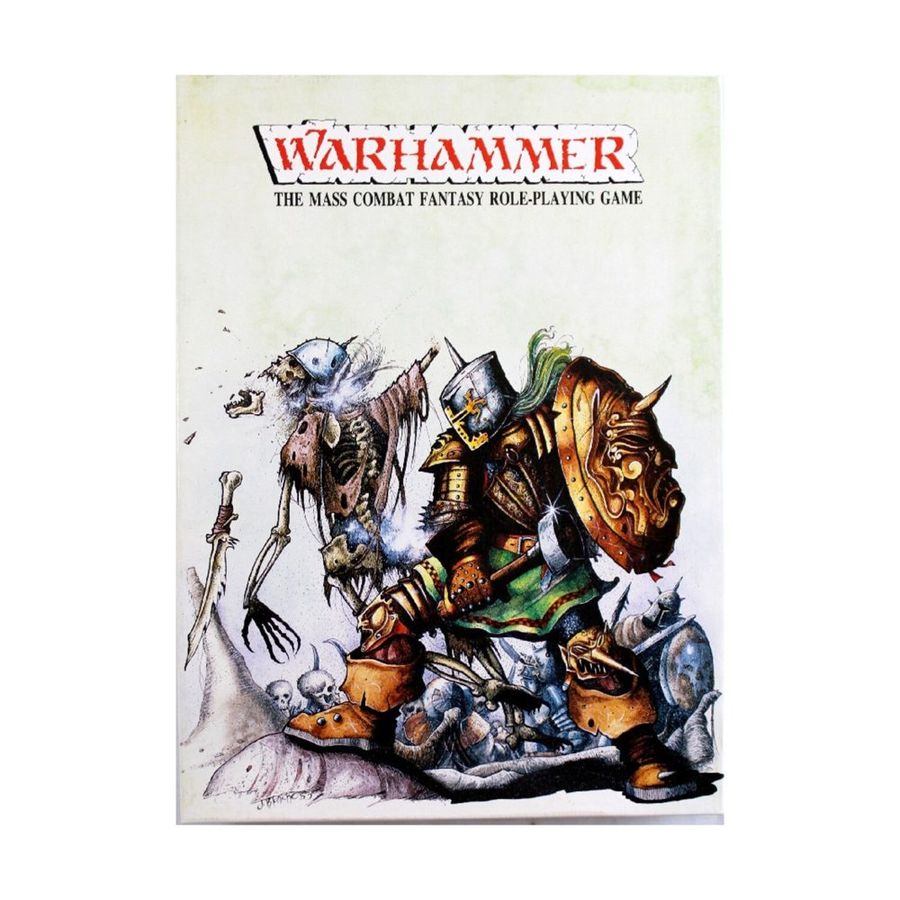
Warhammer: The Mass Combat Fantasy Role-Playing Game
> IMG: FB1.JPG [IMAGE VIEWER]
> Overview
The starting point: a 1983 boxed set holding three softback books — Tabletop Battles, Magic and Characters — written by Bryan Ansell, Richard Halliwell and Rick Priestley. There were no miniatures inside; players supplied their own 25mm figures, and the rules mixed roleplaying elements in with the mass battles.
> Background Story
Nothing here works like a modern starter set — no fixed armies, no campaign in the box. What it established was the frame: the Empire, Elves, Dwarfs, Orcs and Undead fighting across a world shaped by the long war against Chaos. Within a few years that frame had become the default fantasy setting for an entire hobby.
ENTRY 021984Warhammer Fantasy Battle / The Old World
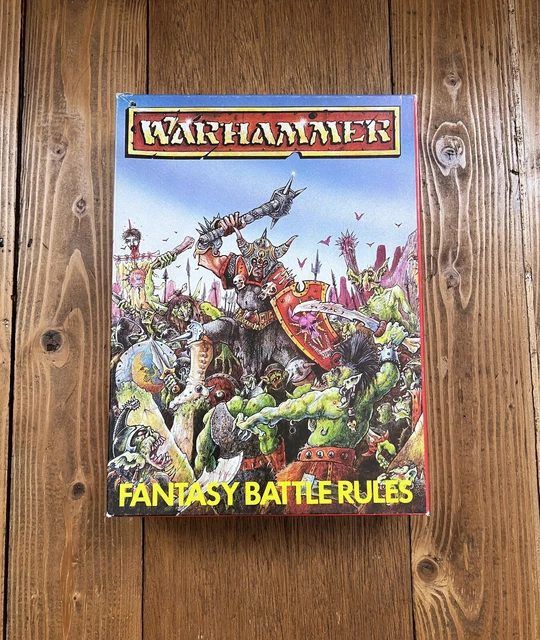
Warhammer Fantasy Battles 2nd Edition
> IMG: FB2.JPG [IMAGE VIEWER]
> Overview
A second edition arrived barely a year after the first, tightening the rules and pushing the game toward larger, properly organised armies. It is the edition that turned Warhammer from a loose skirmish-and-roleplay hybrid into a recognisable battle game with a real structure.
> Background Story
The background deepened with it. The history of the Old World, the rise of the Empire and the slow spread of Chaos were laid out in far more detail, so players were no longer fighting over a blank table — they were fighting over a shared world with a past.
ENTRY 031987Warhammer Fantasy Battle / The Old World
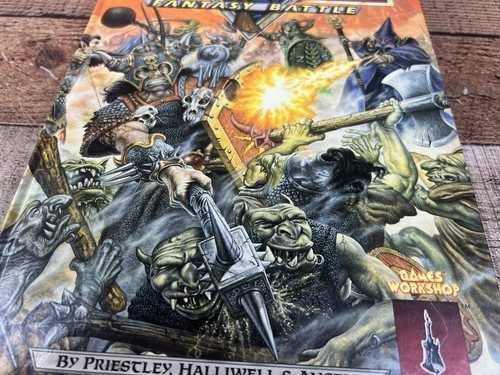
Warhammer Fantasy Battles 3rd Edition
> IMG: FB3.JPG [IMAGE VIEWER]
> Overview
The third edition dropped the box of booklets for one large hardback rulebook, the format Warhammer would keep for decades. Formations, manoeuvre and psychology all mattered more, and the miniature range grew sharply alongside the rules.
> Background Story
Its era is inseparable from Realm of Chaos (1988), the two hardback volumes that defined Chaos for Warhammer and 40K alike — the four gods, their champions and their gifts. Much of the grim tone both games are still known for was set in print here.
ENTRY 041992Warhammer Fantasy Battle / The Old World
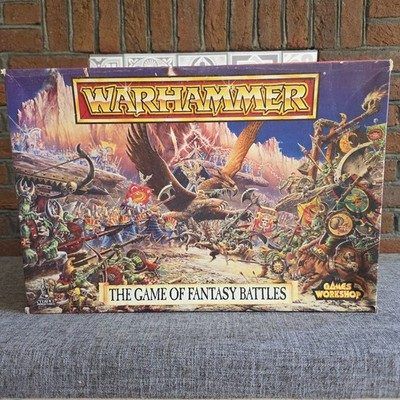
Warhammer: The Game of Fantasy Battles 4th Edition
> IMG: FB4.JPG [IMAGE VIEWER]
> Overview
Released in October 1992, the fourth edition starter was the first complete Warhammer in a box: 104 plastic miniatures — 40 High Elves and 64 Goblins — with cardboard stand-ins for a general and a war machine. From this edition on, every race would get its own army book.
> Background Story
The scenario booklet, The Battle for Maugthrond Pass, retells Grom the Paunch's invasion of Ulthuan — the Goblin warlord who ate troll meat, swelled into something unstoppable, and smashed his way across the High Elf homeland before vanishing into legend. Elf spearmen against a green tide: the edition's whole identity in one mountain pass.
ENTRY 051996Warhammer Fantasy Battle / The Old World
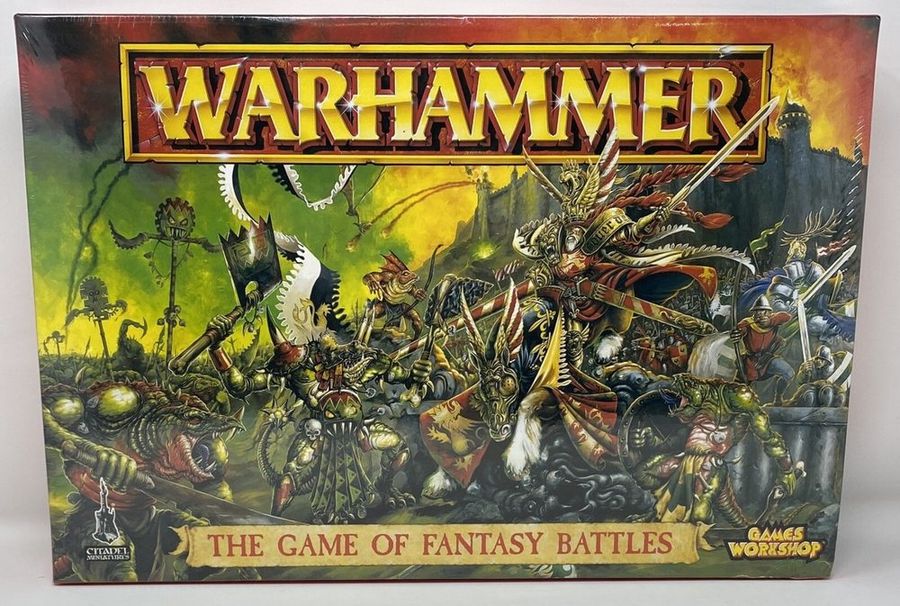
Warhammer: The Game of Fantasy Battles 5th Edition
> IMG: FB5.JPG [IMAGE VIEWER]
> Overview
The fifth edition starter sent Bretonnian knights and bowmen against the Lizardmen — Saurus and Skink warriors defending their jungle cities. The rulebook was lighter and faster than the door-stopping third edition, and the pairing gave both Bretonnia and the Lizardmen their first full army books.
> Background Story
The framing is a Bretonnian expedition to Lustria: knights sailing west for glory and gold, straight into the territory of the oldest civilisation in the world. The Lizardmen arrived as a playable army with this pairing, and their cold, alien Great Plan has anchored Warhammer's deep history ever since.
ENTRY 062000Warhammer Fantasy Battle / The Old World
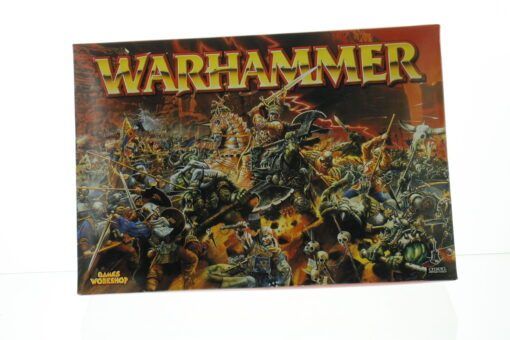
Warhammer: The Game of Fantasy Battles 6th Edition
> IMG: FB6.JPG [IMAGE VIEWER]
> Overview
The sixth edition starter matched Empire state troops against an Orc & Goblin horde, and the edition opened with Ravening Hordes, a single booklet of interim army lists so every existing collection could play from day one. Priestley's rewrite cut the game back to manoeuvre and morale.
> Background Story
This is the Old World at its most grounded: ranked spearmen, knightly orders and artillery facing a greenskin migration rolling out of the mountains. No single cataclysm drives it. The edition's flavour is the everyday, grinding war the Empire was built to survive.
ENTRY 072006Warhammer Fantasy Battle / The Old World
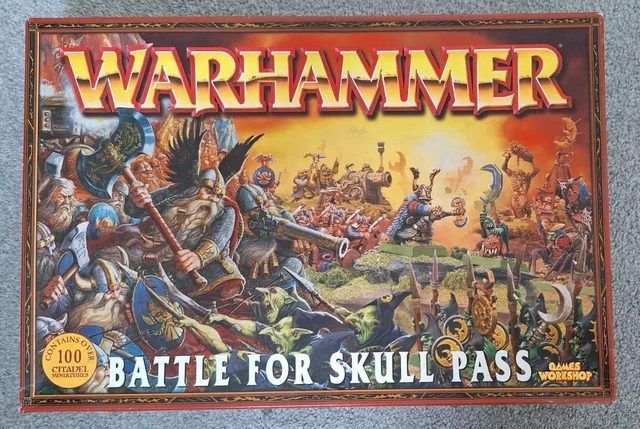
Battle for Skull Pass
> IMG: FB7.JPG [IMAGE VIEWER]
> Overview
The seventh edition starter was famously generous: more than 100 miniatures — a Dwarf throng with miners, a cannon and a pony-drawn mine cart, against Night Goblin spearmen, archers, spider riders and a troll — plus plastic mine terrain. Two complete armies in one box.
> Background Story
Skull Pass is the road through the mountains, and the Dwarfs hold it because the mines beneath feed their holds. The Night Goblins come up from below to take both. It is the oldest grudge in the Old World: Dwarfs and Goblins have been killing each other over these tunnels since before the Empire existed.
ENTRY 082010Warhammer Fantasy Battle / The Old World
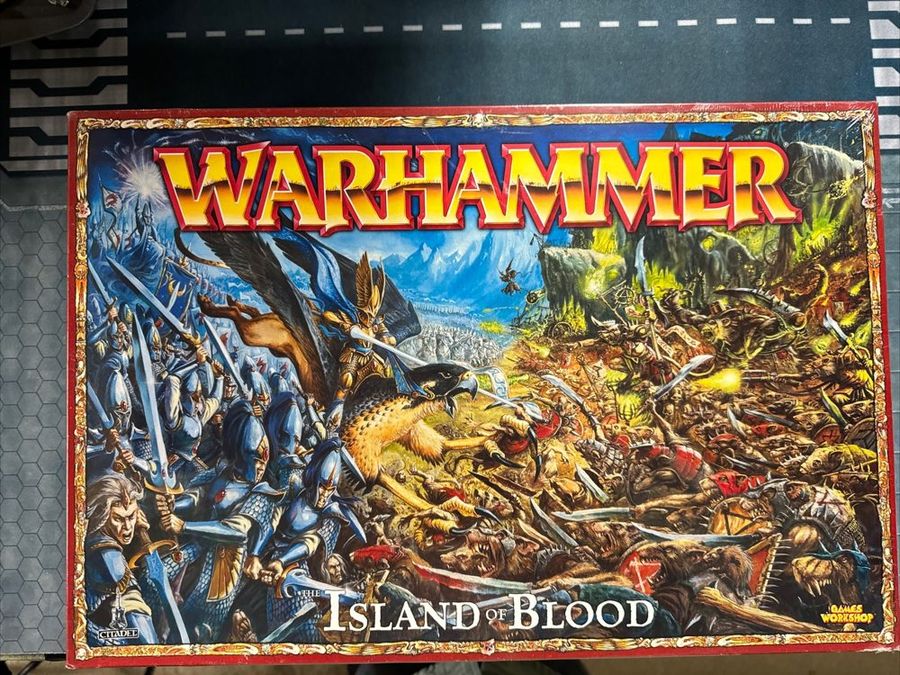
Island of Blood
> IMG: FB8.JPG [IMAGE VIEWER]
> Overview
The eighth edition starter — and the last ever made for Warhammer Fantasy — held over 70 miniatures: High Elves led by a prince on a griffon against a Skaven horde with a Rat Ogre and a Warpfire Thrower. The sculpts are still counted among the finest starter models GW has produced.
> Background Story
Skaven Warlord Skreet Verminkin tunnelled beneath the seabed to raid an island outpost off Ulthuan, hunting the Phoenix Stone kept in its temple. Prince Althran, on his griffon Sharpclaw, and the Mage Caladris drove the raid back. In 2016 the same miniatures returned as Spire of Dawn — the old game's quiet afterlife.
ENTRY 092024Warhammer Fantasy Battle / The Old World
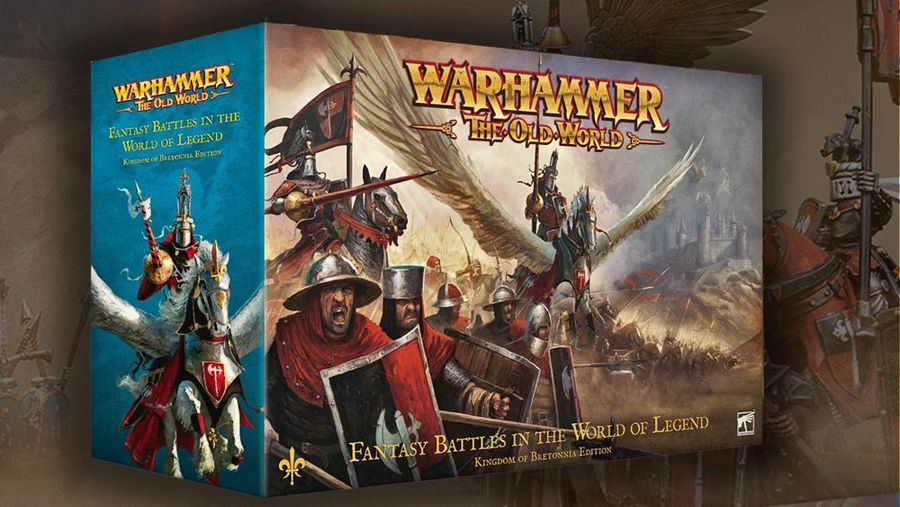
Warhammer: The Old World
> IMG: FB9.JPG [IMAGE VIEWER]
> Overview
Warhammer: The Old World launched in January 2024, nine years after the setting was destroyed, with two core sets: Bretonnia and the Tomb Kings of Khemri — pointedly, the two armies dropped back in 2015. Ranked regiments are the game again, and many classic kits returned alongside new plastic and resin.
> Background Story
The year is 2276 of the Imperial Calendar, some 250 years before the End Times. The Empire lies fractured between rival emperors, and in the south Settra the Imperishable leads the Tomb Kings into the Border Princes — where Bretonnian knights, sworn to defend the Lady's pilgrims, ride out to meet an army that has been dead for millennia.
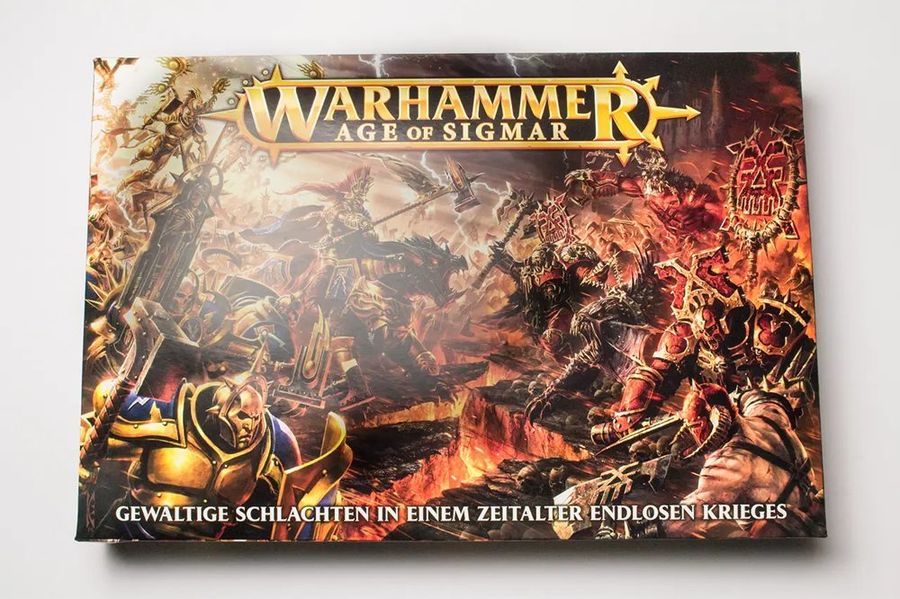
Age of Sigmar replaced Warhammer Fantasy in July 2015, and this was its first box: Stormcast Eternals against the Khorne-worshipping Goretide. The rules were radically small — the launch game famously fit on a handful of pages — and the gold-armoured Stormcast were an entirely new kind of Warhammer hero.
> Background Story
The box depicts the opening clash of the Realmgate Wars on the Brimstone Peninsula in Aqshy, the Realm of Fire. Vandus Hammerhand leads the Hammers of Sigmar down from Azyr to break Korghos Khul's Goretide and seize a realmgate: Sigmar's counterattack after centuries spent hiding from Chaos.
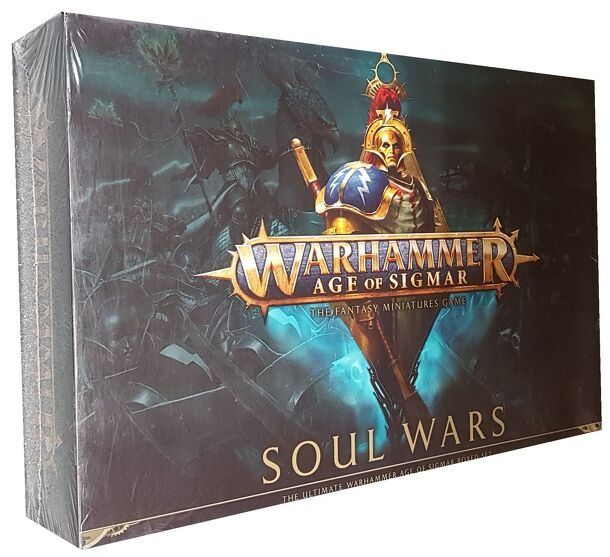
The second edition starter is a big box by any measure: 52 push-fit miniatures — 33 Nighthaunt against 19 Stormcast — a 320-page hardback core book, and the Battle for Glymmsforge campaign booklet. It also debuted the Sacrosanct Chamber, the first Stormcast wizards.
> Background Story
Nagash's great ritual in Shyish, the Necroquake, was sabotaged by Skaven spies, and death magic meant to remake the realms surged out of control instead. The result was the Nighthaunt: armies of ghosts, the angry dead of every age, rising all at once. Soul Wars tells that haunting — and Sigmar's wizard-knights holding the free city of Glymmsforge against it.
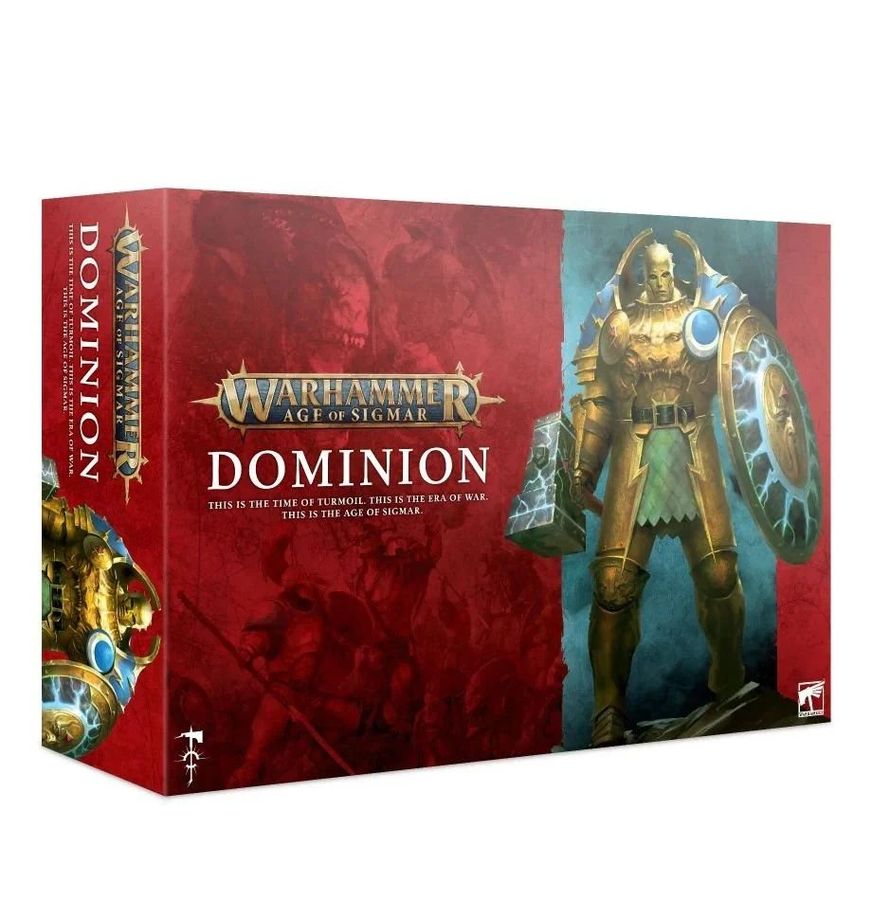
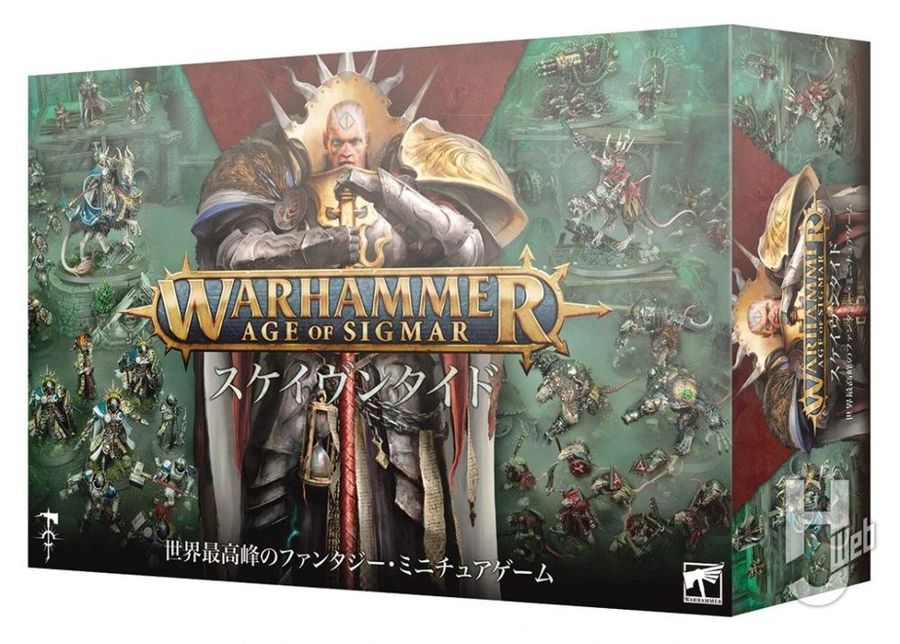
The third edition launch box introduced the Kruleboyz, a new breed of swamp-dwelling Orruk built for ambush and poison, against Stormcast in new Thunderstrike armour. It is a heavy box even by launch standards, and it shifted Age of Sigmar's centre of gravity to Ghur, the Realm of Beasts.
> Background Story
The Era of the Beast began with the god Kragnos breaking free, and Dominion sits in that wilder, hungrier age. The Kruleboyz follow Mork (or possibly Gork) as cunning hunters who poison wells and strike from the marsh — a different kind of greenskin, fighting the Stormcast's attempt to push Sigmar's frontier into monster country.
The fourth edition launch box pits Stormcast of the new Ruination Chamber against a full Skaven army — the ratmen's first range-wide refresh in years, with new Clanrats, Rat Ogors and the Master Moulder's experiments. The edition's rules were rebuilt to serve both the small Spearhead format and full-scale battles.
> Background Story
The Vermindoom: the Skaven gnawed a hole in reality itself, and their capital, Blight City, has begun forcing its way into Aqshy, the Realm of Fire. The Great Horned Rat has taken a seat among the Chaos Gods — and the Ruination Chamber, Stormcast reforged so many times they are more lightning than people, are sent in because nobody else can be risked.
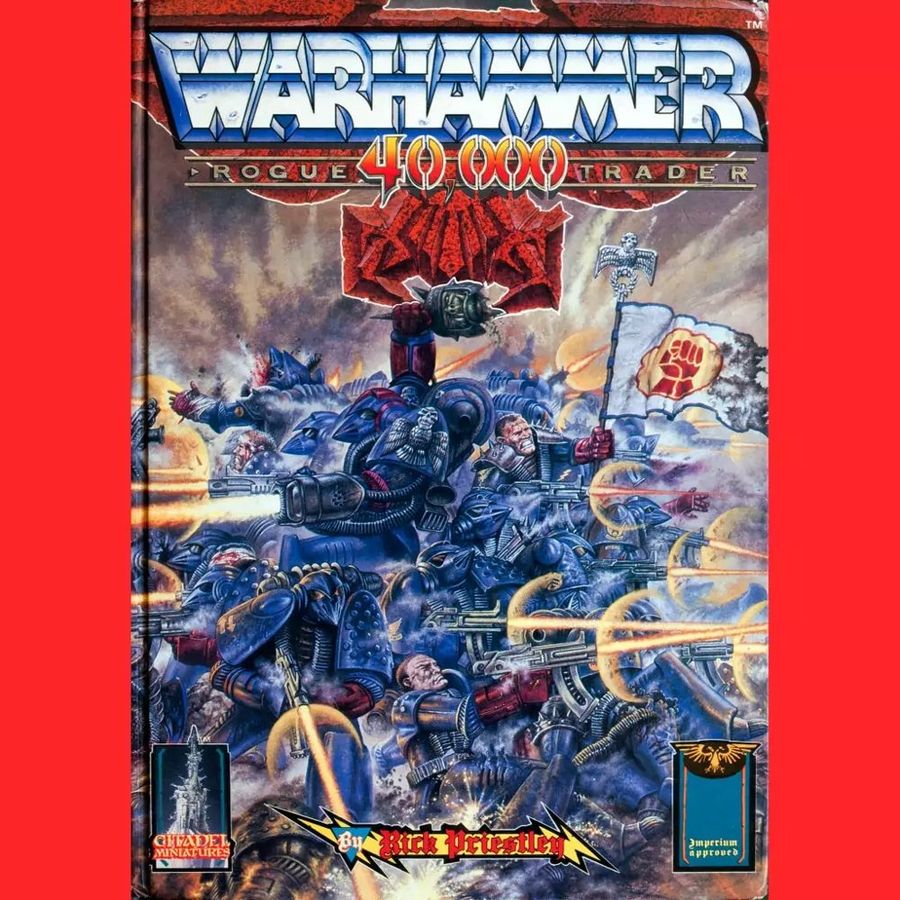
Warhammer 40,000 began in 1987 as this single hardback by Rick Priestley: part wargame, part roleplaying game, with a games master, random alien generation and rules for designing your own vehicles. Armies were small, scenarios improvised, and very little was standardised yet.
> Background Story
The book sketched the Imperium almost whole — the Emperor on the Golden Throne, Space Marines, the warp, Orks, Eldar and the first Tyranids all appear in it. It reads less like a finished setting than a foundation stone: every later edition of 40K is, in part, an argument with what Priestley wrote here.
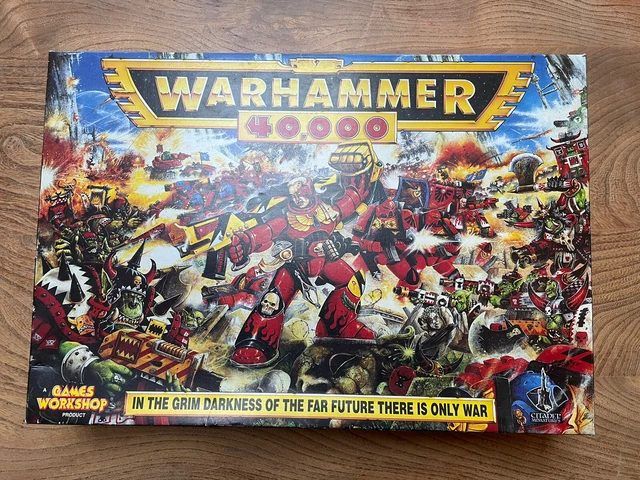
The second edition came in a box stacked with plastic: Space Marines facing Orks and a huge mob of Gretchin, plus a cardboard Ork Dreadnought. The rules made 40K a characterful skirmish game of heroes, wargear cards and psychic powers, expanded further by Dark Millennium (1994).
> Background Story
The Marines on the box art are Blood Angels, and the era's fiction leaned hard into that chapter's tragedy — cursed gene-seed, the Black Rage, a hero's death long ago at the hands of Horus. Second edition is remembered for small games where one sergeant's wargear could decide everything.
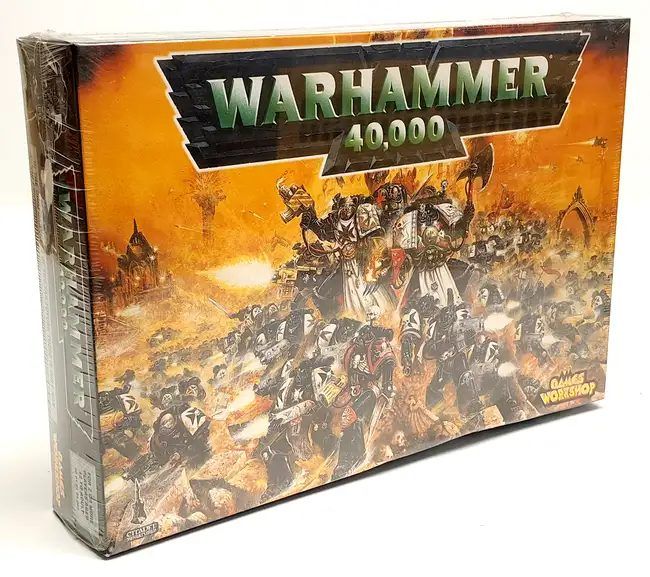
Third edition stripped 40K back down — faster rules, bigger battles, less hero-hammer. The starter box put Space Marines, with a Land Speeder included, against the Dark Eldar: a brand-new army making its debut, all blades, splinter weapons and obscene speed.
> Background Story
The Dark Eldar came out of Commorragh, the hidden city in the webway, where the heirs of the old Eldar empire sustain themselves on other people's pain. Their introduction filled in the darkest corner of the Eldar story and handed the setting one of its defining villains.
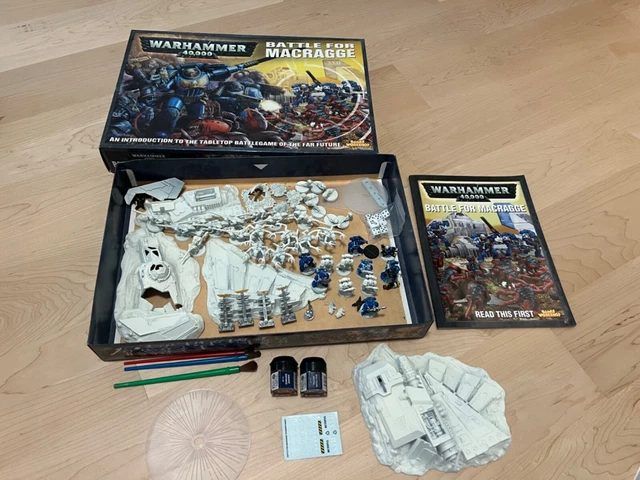
The fourth edition starter was a small, focused box: Ultramarines against Tyranids, built around a crashed Imperial Aquila lander that came in the box as a terrain piece. It taught the game through a short campaign of linked missions rather than one big opening battle.
> Background Story
Macragge is the Ultramarines' home world, and in 745.M41 Hive Fleet Behemoth — the first Tyranid hive fleet to reach the Imperium — threw itself against it. The fleet was destroyed, but the Ultramarines' entire First Company died holding the polar fortresses. The starter replays that war's last, desperate ground battles.
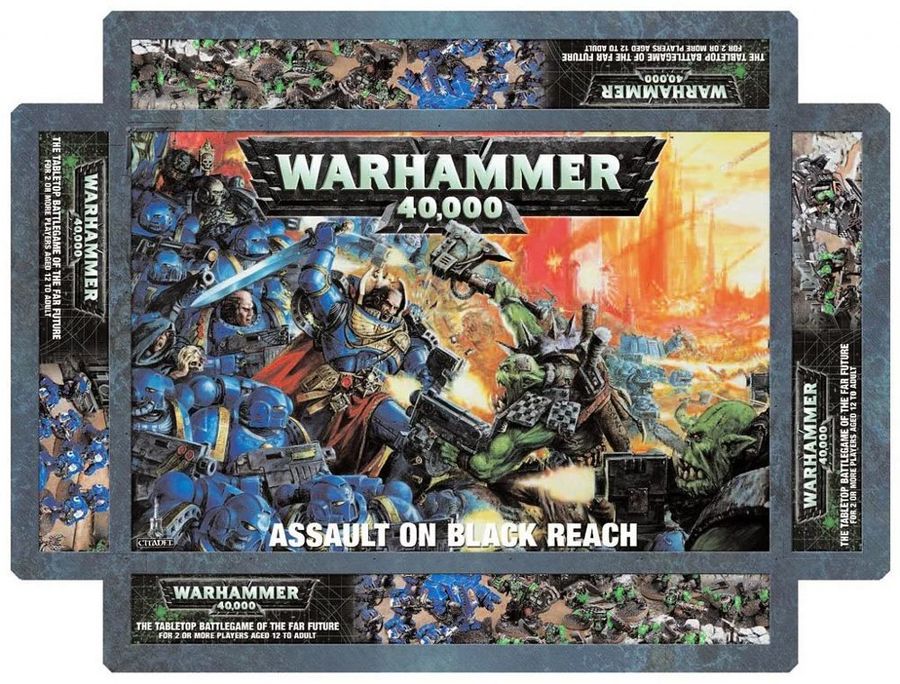
The fifth edition starter paired Ultramarines with Orks in a compact, inexpensive box that became the default way into 40K for years. The forces are small — a Captain, Terminators and a Dreadnought against a Warboss, Nobz and Deffkoptas — and every model is push-fit.
> Background Story
In 855.M41, Waaagh! Zanzag fell on the hive world of Black Reach. Only three of its twelve hive cities still held when the Ultramarines' Second Company arrived under Captain Cato Sicarius, who fought through the ruins and killed Zanzag himself. It is the kind of clean, heroic story the Imperium likes to tell about this war.
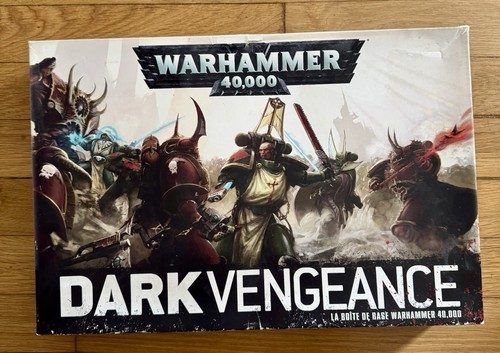
The sixth edition starter introduced the Crimson Slaughter, a Chaos warband created for this box, against Dark Angels — with Deathwing Terminators and Ravenwing bikes showing off the range. A limited version of the box added an Interrogator-Chaplain named Seraphicus.
> Background Story
The Crimson Slaughter were once the loyal Crimson Sabres, declared renegade after the massacre on Umidia and cursed by Khorne to hear the voices of everyone they have ever killed. At Bane's Landing their lord, Kranon the Relentless, fights Dark Angels Master Balthasar over the Hellfire Stone — an artefact that might silence the voices, or make them louder.
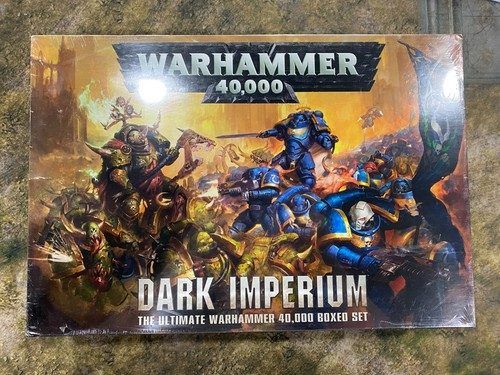
The eighth edition launch box did two things at once: it introduced the Primaris, a new and bigger breed of Space Marine, against Nurgle's Death Guard. It was the largest shake-up of the 40K range in decades, and its easy-build sculpts set the template for modern starter sets.
> Background Story
Roboute Guilliman, primarch of the Ultramarines, woke after ten thousand years in stasis to find the galaxy cut in two by the Great Rift. The Primaris Marines — held in reserve since the Heresy by Archmagos Cawl — were his answer. The Death Guard in this box are the other side of that war: Mortarion's legion, spreading plague out of the Scourge Stars.
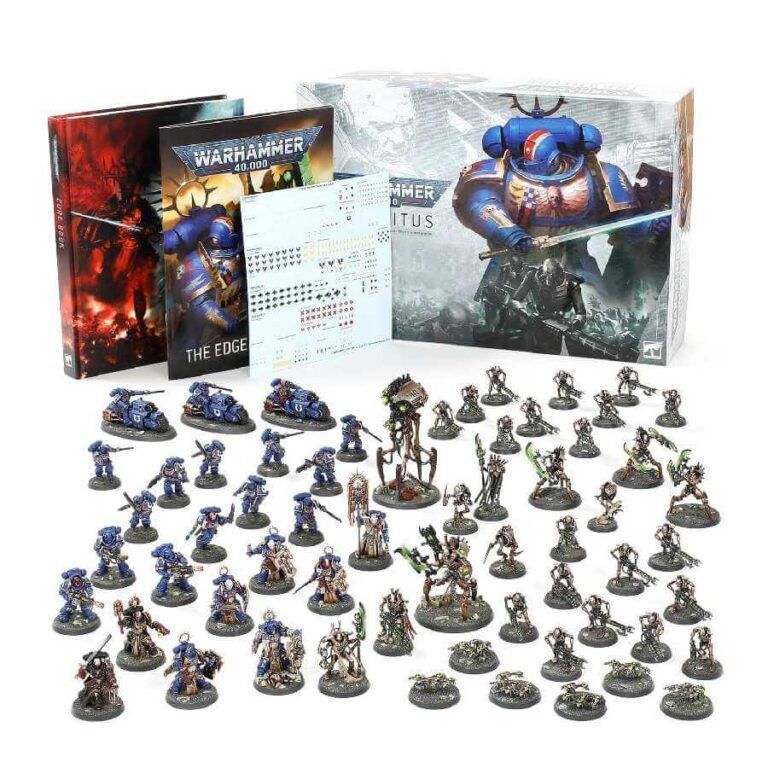
The ninth edition launch box — Space Marines against the newly awakened Necrons — sold out in minutes, and was put back into production as a made-to-order run, a first for a launch box. Its contents introduced the current generation of push-fit Marines and the new Necron range in a single hit.
> Background Story
The box belongs to the Indomitus Crusade, Guilliman's counteroffensive into the dark half of the galaxy. Waiting for it are the Necrons: an empire that slept for sixty million years, now waking under the returned Silent King — and unimpressed to find the galaxy infested with younger species.
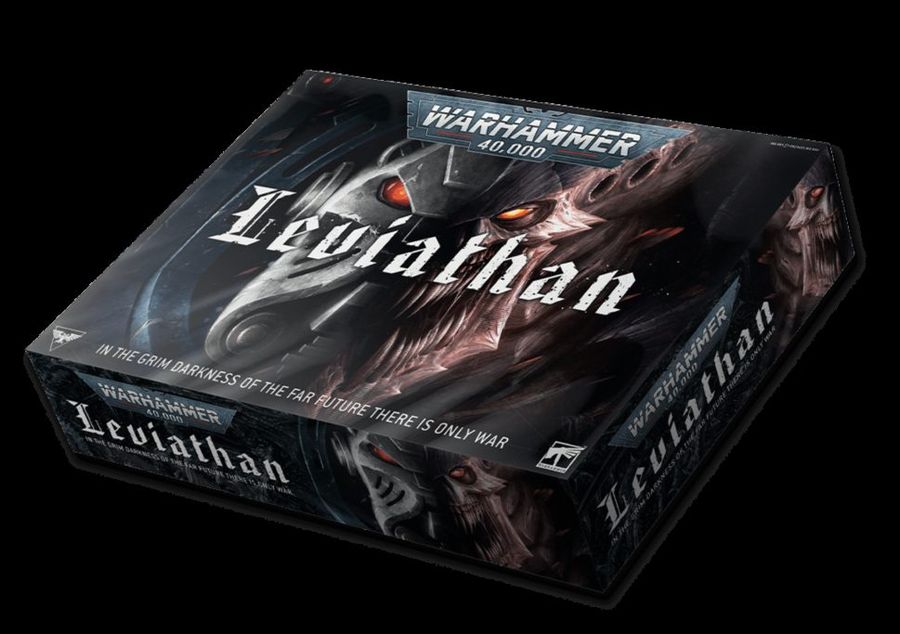
The tenth edition launch box is the biggest starter GW has made: 72 miniatures — 25 Space Marines against 47 Tyranids — plus a hardback rulebook with a full campaign section. The Tyranid range was comprehensively redesigned for it, from Termagants up to the new Norn Emissary.
> Background Story
Hive Fleet Leviathan, the largest ever recorded, was thought broken at Baal. In the Fourth Tyrannic War its tendrils arrive from the galactic west instead, into Segmentum Pacificus, where no defences were ready. The box is that first contact: veteran First Company Marines, the Imperium's Tyranid specialists, meeting a fleet that has adapted to everything that stopped it before.
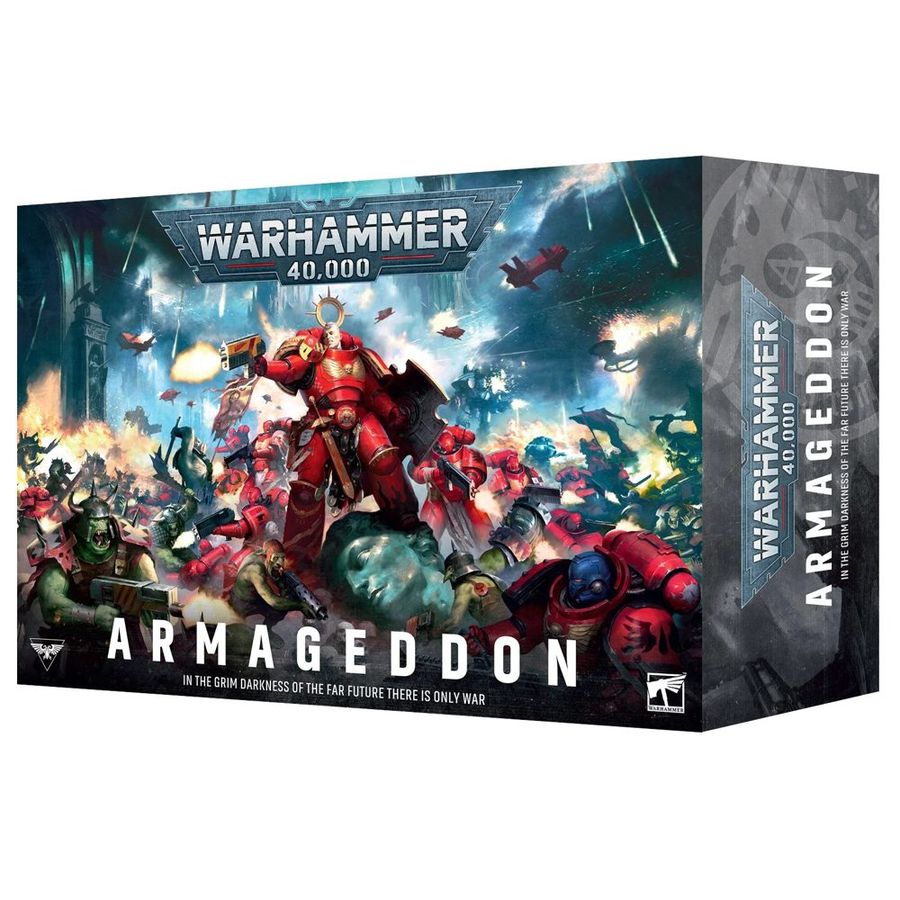
The eleventh edition launch box, released on 20 June 2026: 61 push-fit miniatures — 23 Space Marines drawn from several chapters against 38 Orks — plus an exclusive hardback lore book, Operation Imperator, found only in this box. The Marines here are a coalition, not a single chapter.
> Background Story
Armageddon is where Commissar Yarrick made his name fighting Ghazghkull Thraka, and the war has come back. After the events of Armageddon: The Return of Yarrick, Wazdakka Gutsmek's vanguard has already landed and Ghazghkull's main horde is behind it. Yarrick's plea for help triggers Operation Imperator: Blood Angels, Salamanders, Ultramarines, Space Wolves and more, sent to hold the planet that never gets to rest.
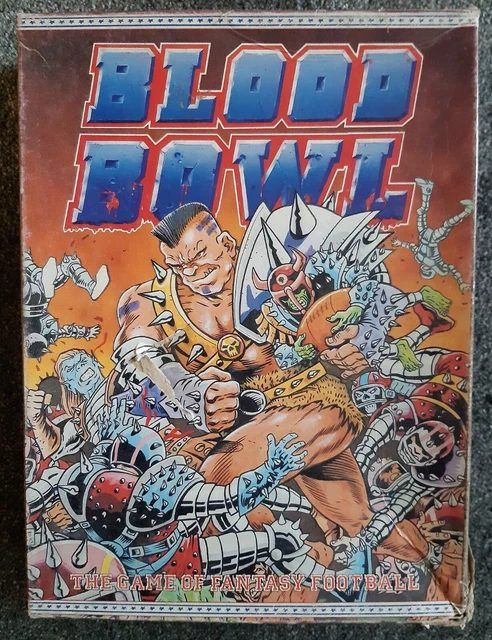
Jervis Johnson's fantasy football game, first released in 1986 with cardboard stand-up counters instead of miniatures. Two teams of Orcs, Humans, Elves or Dwarfs play a violent parody of American football in which the ball matters slightly less than the body count.
> Background Story
Blood Bowl takes place in a tongue-in-cheek alternate Warhammer world where wars were settled on the pitch instead, and the god Nuffle presides over the game. The joke stuck: league play, star players and one-turn touchdowns made it one of GW's most durable spin-offs.
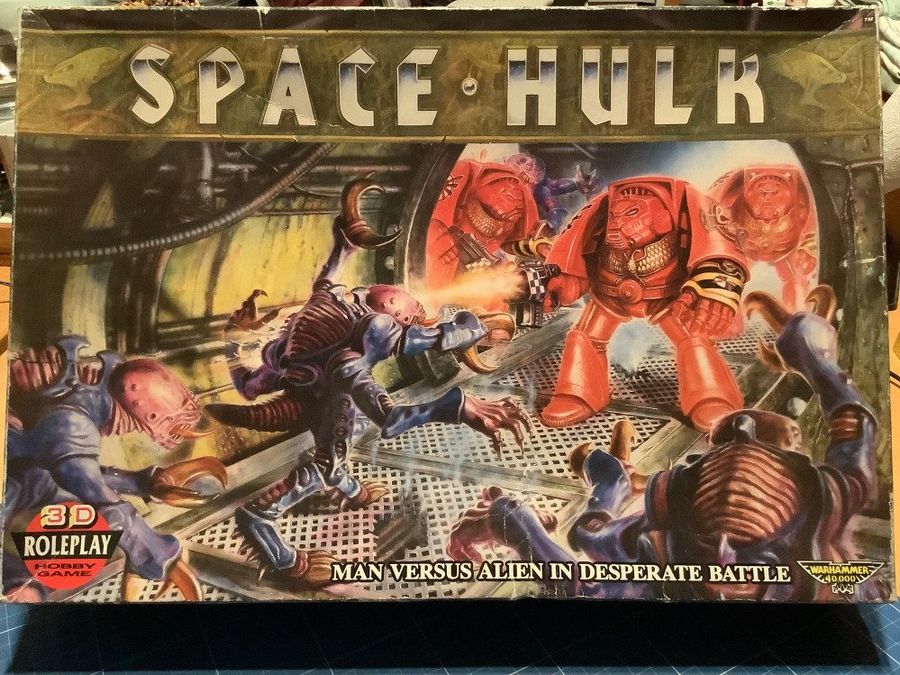
A two-player board game of corridors and closing doors: one side commands a squad of Blood Angels Terminators, the other a swarm of Genestealers, inside the crushed-together wreckage of ancient starships. The 1989 box was tense, fast and famously unforgiving.
> Background Story
Space hulks drift out of the warp stuffed with lost technology — and Genestealers. The Terminators boarding them are buying the Imperium time with their lives. Expansions Deathwing and Genestealer (both 1990) added new squads and psychic powers, and the core duel has been reprinted ever since.
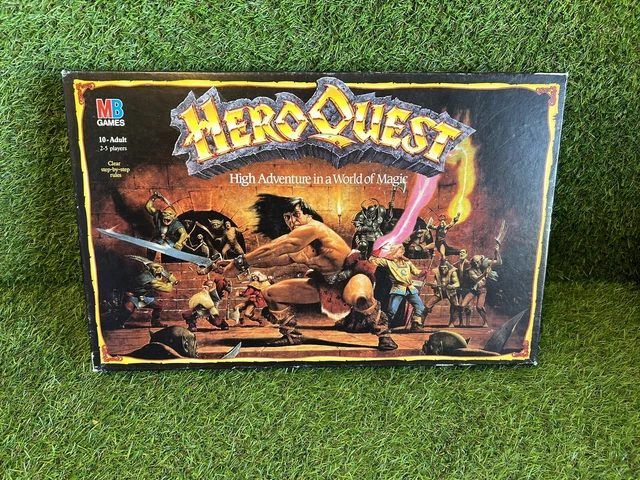
Made with Milton Bradley and designed by Stephen Baker, HeroQuest put four heroes — Barbarian, Dwarf, Elf and Wizard — on a board of furnished rooms against the evil wizard Morcar (renamed Zargon in the US edition). For many players in 1989, this was the first dungeon they ever entered.
> Background Story
The heroes serve Mentor, the old wizard who sends them into Morcar's strongholds to rescue prisoners, hunt treasure and push back Chaos one quest at a time. The furniture, the doors and the quest book taught a generation what a dungeon crawl was — and the 2021 revival kept the same skeleton.
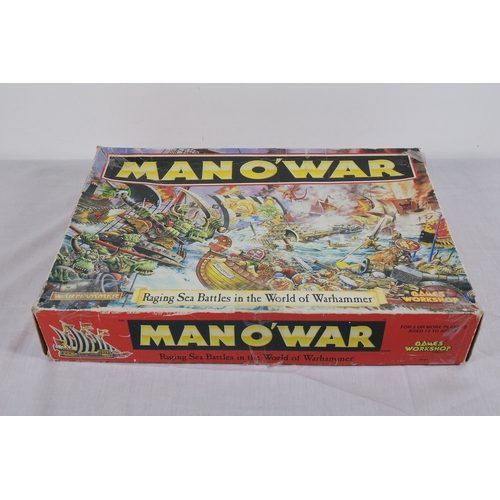
Naval warfare in the Old World: fleets of Empire, Bretonnian, Dwarf, Elf, Orc and Chaos ships fighting with cannon, rams and boarding actions on a card sea. The 1993 box and its expansions Sea of Blood and Plague Fleet covered everything from sea monsters to plague ships.
> Background Story
It remains the only full fleet game Warhammer ever had. Each navy fights the way its race does on land — Dwarf ironclads shrug off damage, Bretonnian galleons rely on the broadside, and Chaos fleets bring things aboard that no crew survives meeting.
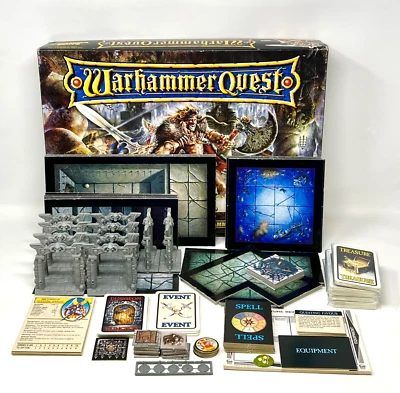
A dungeon board game for four heroes — Warrior, Dwarf, Elf and Wizard — where the dungeon itself is dealt from cards, so nobody has to be the games master. The 1995 box packed in dozens of miniatures, interlocking room boards and an adventure book of linked quests.
> Background Story
The heroes descend beneath the Old World hunting gold and the artefacts of lost kingdoms, and the event cards make every corridor a gamble. Expansions such as Lair of the Orc Lord and Catacombs of Terror deepened it, and its card-driven co-operative design is still the template later Quest games follow.
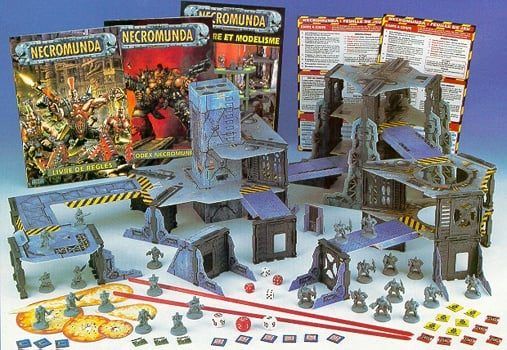
Gang warfare in the Underhive, built around campaign play: your gang takes territory, suffers injuries, gains experience and changes permanently between games. The 1995 box paired plastic Orlock and Goliath gangers with the game's signature multi-level plastic-and-card terrain towers.
> Background Story
Hive Primus is a city miles high, and the Underhive at its base is where the six Clan Houses — Goliath, Escher, Orlock, Van Saar, Delaque and Cawdor — send their young to fight over scrap, creds and reputation. Everything the Imperium throws away ends up down here, including its people.
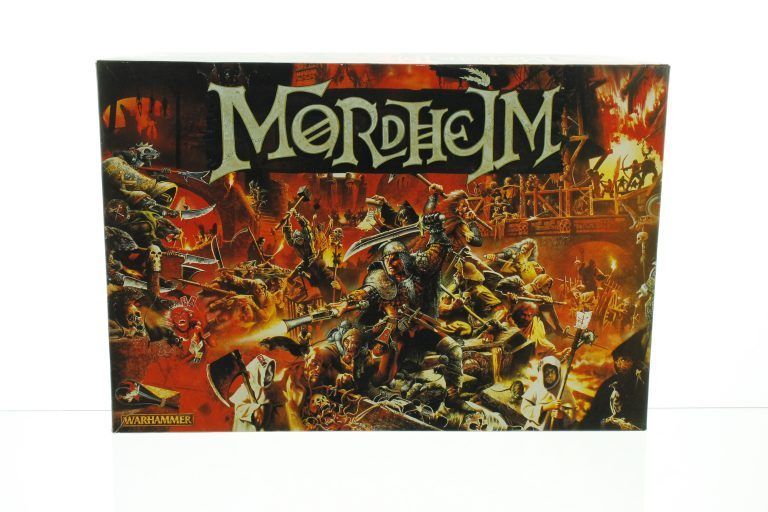
A skirmish campaign game of small warbands — roughly a dozen models a side — fighting through a ruined city for treasure. It runs on territory, injuries and gold, earned one shard of wyrdstone at a time, and it became one of GW's most loved settings.
> Background Story
In the Imperial year 1999, a twin-tailed comet — read across the Empire as Sigmar's sign — smashed into Mordheim and destroyed it. The green-glowing wyrdstone it scattered is worth a fortune, so mercenaries, Witch Hunters, Sisters of Sigmar, Skaven, Undead and the Possessed all crawl through the ruins after it. Most never leave.
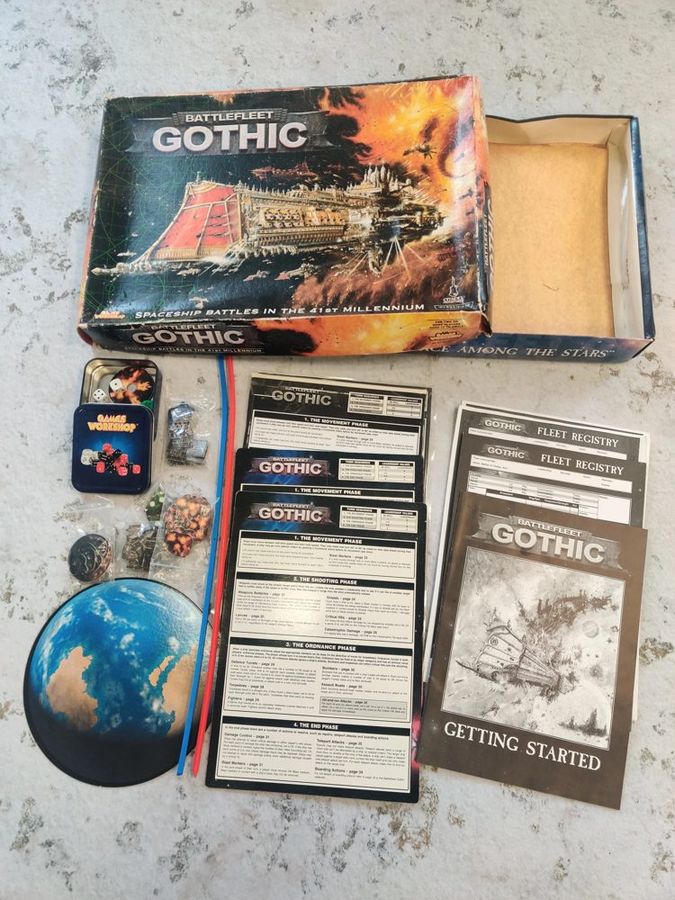
Fleet-scale space combat: the starter box held four plastic Imperial cruisers and four Chaos cruisers, with rules for torpedoes, boarding actions and full campaigns. Ships here are individuals — named, scarred, and crewed by veterans who improve over a campaign.
> Background Story
The game is built around the Gothic War, Abaddon the Despoiler's Twelfth Black Crusade into the Gothic Sector. Imperial Navy squadrons hunt Chaos raiders between warp storms — while Abaddon hunts something else: the Blackstone Fortresses, weapons from a war older than humanity.
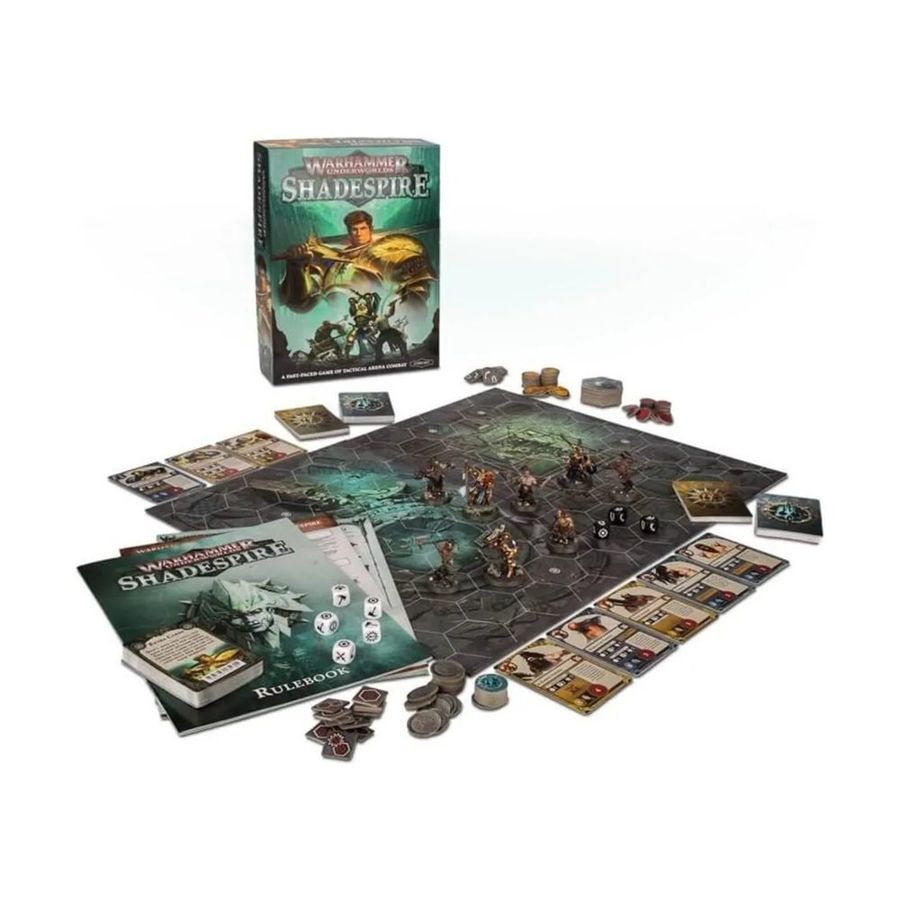
A tight arena board game: two small warbands, a deck of objectives and power cards, and games that finish in about half an hour. The core box matched Steelheart's Champions (Stormcast Eternals) against Garrek's Reavers (Khorne Bloodreavers), and dozens more warbands followed.
> Background Story
Shadespire was famous for shadeglass, a substance that traps the souls of the dead — and Nagash, god of death, does not share. He tore the city out of the world and left it as the Mirrored City, caught between the realms of shadow and light, its people's souls locked in glass while warbands fight for a way out.
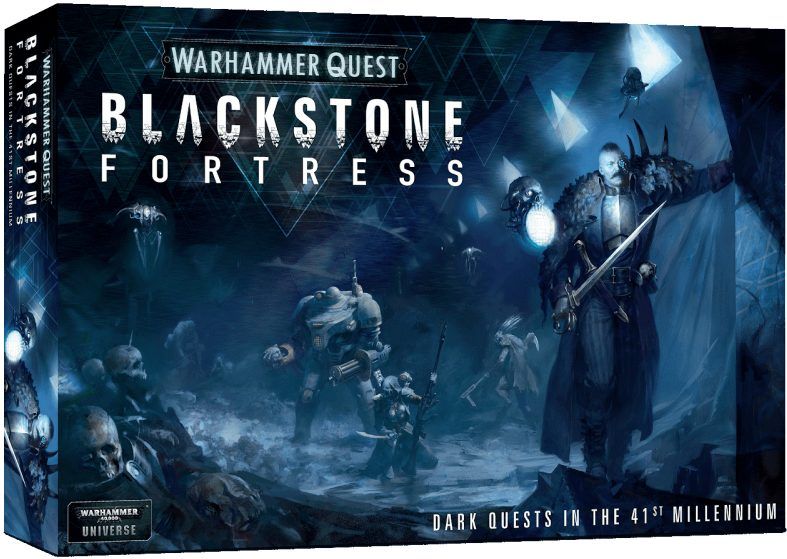
The first Warhammer Quest game set in 40K: a co-operative dungeon crawl for one to five players, in a fortress that rearranges itself between expeditions. The explorers — a Rogue Trader, a Kroot tracker, a Navigator, a zealot and more — face Chaos cultists, traitor guardsmen and stranger things.
> Background Story
A Blackstone Fortress is a weapon-station from a war older than humanity, and this one has woken up near the free port of Precipice. Rogue Trader Janus Draik leads expeditions into it, hunting the Vault at its heart. The fortress, for its part, appears to be studying the explorers right back.
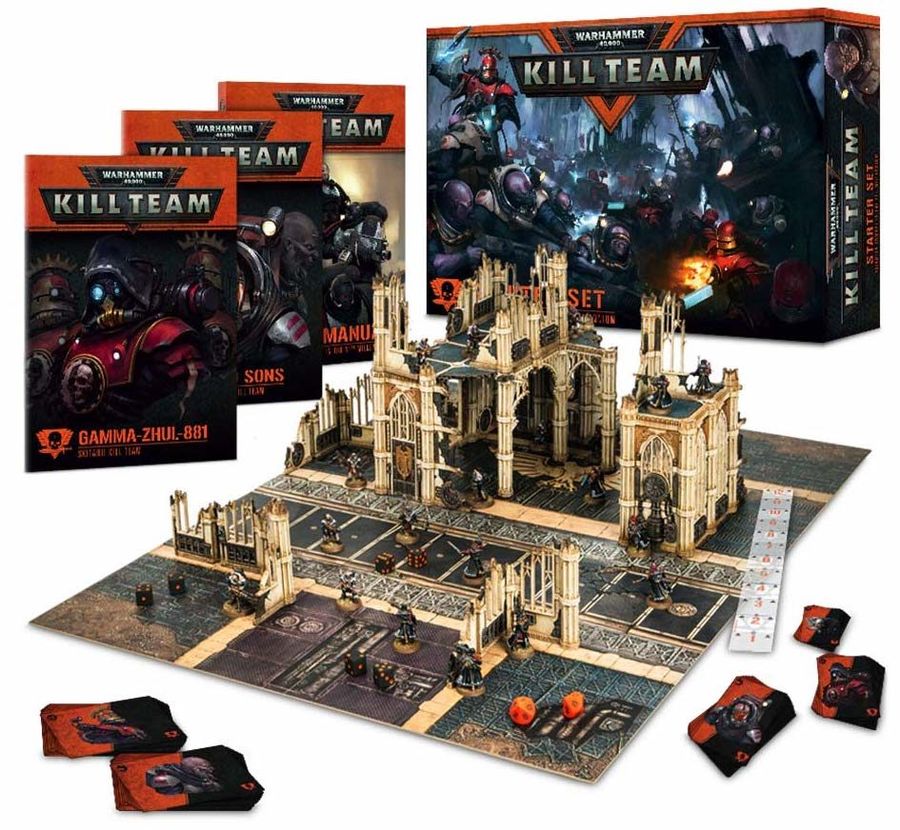
The 2018 relaunch turned 40K into a squad game of individual models — climbing, charging and taking cover one operative at a time. The core box matched Adeptus Mechanicus Skitarii against a Genestealer Cults uprising, with a full set of Sector Mechanicus industrial terrain included.
> Background Story
Kill teams are the war in miniature: a dozen specialists sent to sabotage a reactor, kill a cult patriarch or hold a landing zone while the real armies fight elsewhere. The Genestealer Cults in this box are mid-uprising — workers who worshipped the 'star children', rising at last to greet the hive fleet they believe is coming.
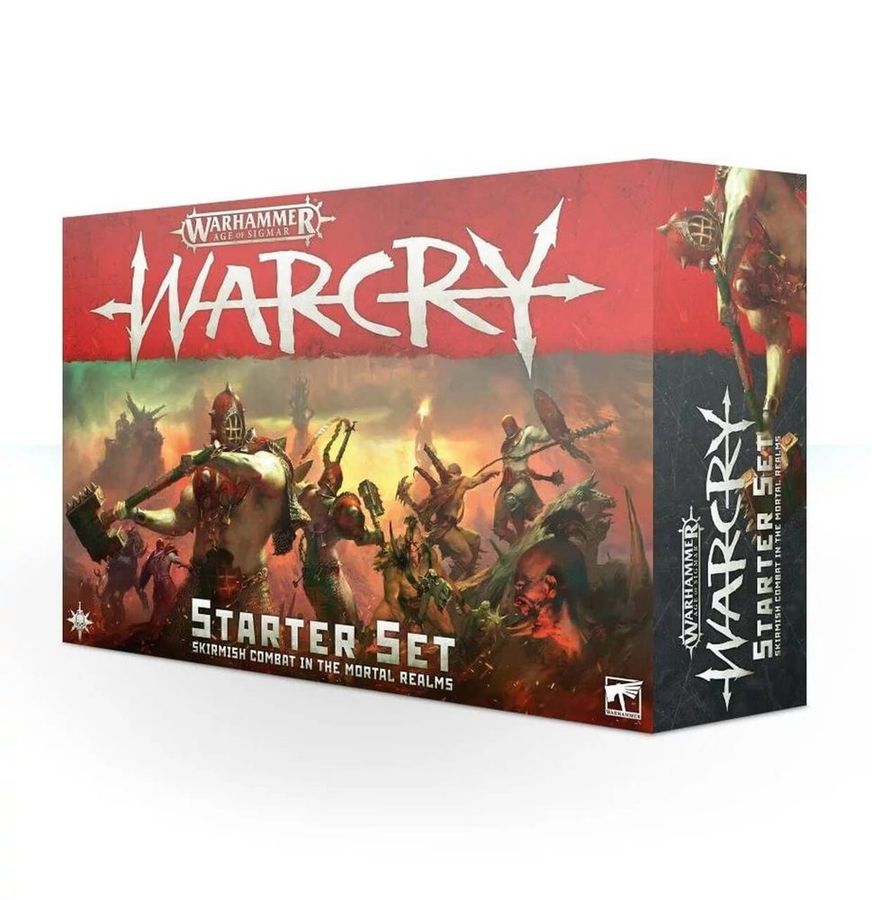
A fast Chaos skirmish game played entirely among the warbands of the dark gods. The core box set the Iron Golems against the Untamed Beasts, and included the game's other signature ingredient: wild Chaos beasts such as Raptoryx and Furies, roaming the board as hazards for both sides.
> Background Story
Every warband in Warcry is walking to the Varanspire, Archaon's fortress at the heart of the Eightpoints, to beg the Everchosen for a place in his legions. Most die on the way, killed by rivals doing exactly the same thing. The Iron Golems forge weapons for the Varanspire; the Untamed Beasts hunt monsters to prove they deserve to reach it.
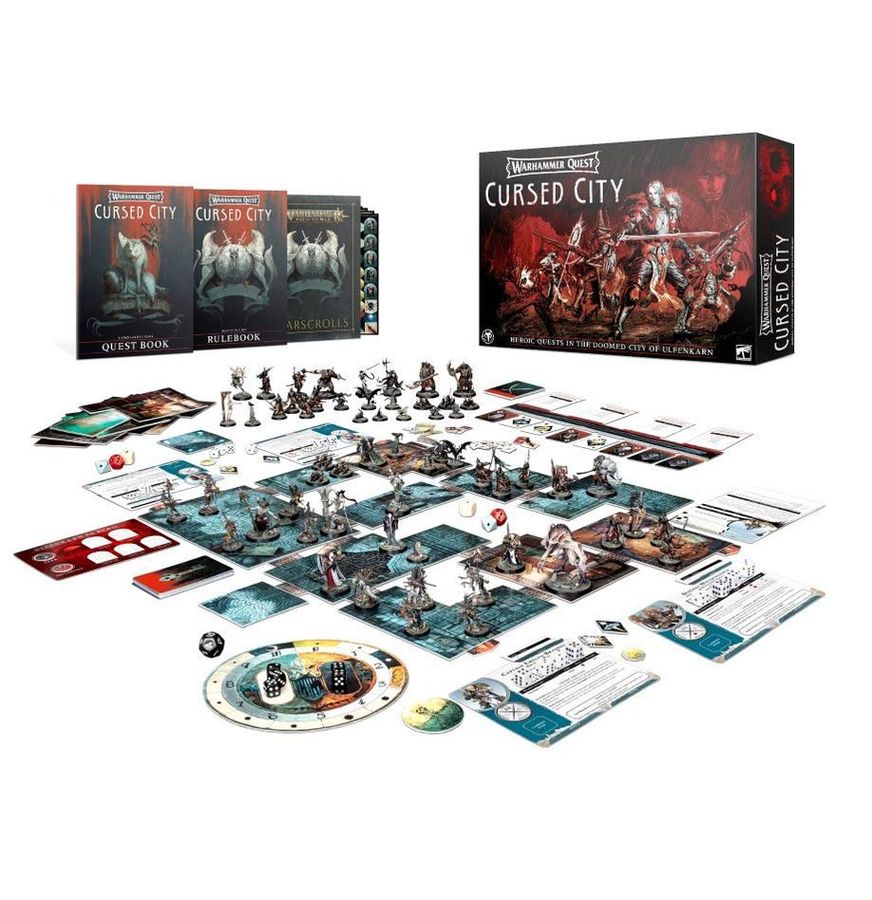
A co-operative Warhammer Quest game of vampire hunting: a band of heroes infiltrates a city of the dead to dismantle its ruler's court piece by piece. The box had a troubled release — it vanished from sale within months of launch, then returned in 2022, with expansions following.
> Background Story
Ulfenkarn was a proud city of Shyish until the Necroquake let the vampire Radukar the Wolf 'save' it — and take it. Now its streets empty at nightfall and its people are taxed in blood. The heroes of Cursed City are the ones who slipped inside: a witch hunter, an ogor, an elf exile and others, hunting Radukar's court one monster at a time.